Dânâ urges UK to help end Turkish Cypriot isolation
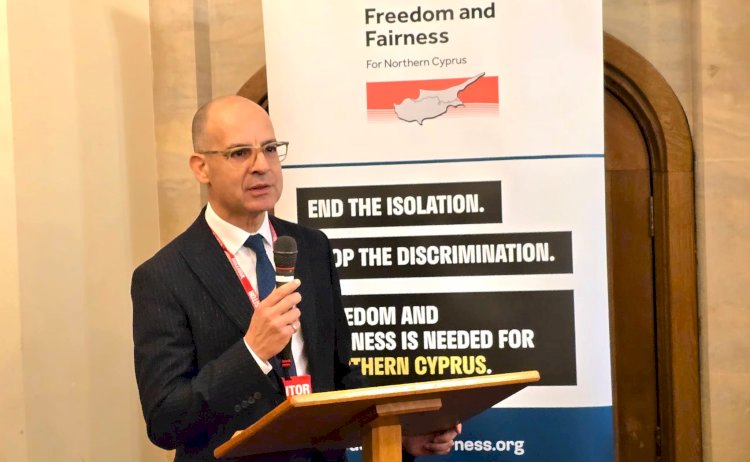
Addressing an event at the Houses of Parliament on Wednesday, Mr Dânâ outlined President Tufan Erhürman’s approach to the Cyprus issue and called for tangible steps to build trust between the two sides.
More than a dozen members of the House of Commons and House of Lords attended the gathering, sponsored by Baroness Nosheena Mobarik and organised with support from the Freedom and Fairness for Northern Cyprus campaign.
Türkiye’s Ambassador to the UK, Koray Ertaş, and the TRNC’s London Representative, Aysan Mullahasan, also attended.
Mr Dânâ said Britain’s historic ties with Turkish Cypriots, its role as one of Cyprus’s three guarantor powers and its permanent seat on the UN Security Council placed it in a particularly important position to help address their isolation. He called on the UK to adopt an impartial approach towards Turkish Cypriots.
Outlining President Erhürman’s results-oriented methodology, Mr Dânâ said confidence-building measures were essential to creating the conditions for meaningful dialogue. Practical progress on the ground, he added, was needed to demonstrate political will and support a constructive negotiating process.

He highlighted restrictions affecting direct trade and flights, alongside obstacles to Turkish Cypriot participation in cultural, sporting, economic, diplomatic and political activities.
Mr Dânâ said interventions by the Greek Cypriot side had led to the cancellation of a football camp, two music festivals and other activities, undermining efforts to build trust.
He referred to UN Secretary-General António Guterres’s response to President Erhürman’s concerns in a letter dated October 16. Mr Guterres described the developments as “disheartening” and contrary to his repeated calls for initiatives that strengthen mutual trust and confidence.
Mr Dânâ also highlighted an October 6 response from the European Commission, which he said acknowledged concerns about the obstruction of Turkish Cypriot activities and the potential consequences for efforts to achieve a comprehensive settlement.
The Commission reaffirmed its aim of building bridges, strengthening dialogue and bringing Turkish Cypriots closer to the EU, he said, referring to the bloc’s April 2004 commitment to end their isolation.
Despite Turkish Cypriots’ overwhelming support for the UN settlement plan in 2004, Mr Dânâ said international promises to ease their isolation had largely remained unfulfilled. He called for those commitments to be translated into concrete measures covering areas including cultural exchanges, sport and trade.
A fair and sustainable settlement would benefit both peoples of Cyprus and contribute to peace, security and stability across the region, he said.
Reaffirming the Turkish Cypriot side’s commitment to constructive dialogue, Mr Dânâ stressed that progress required reciprocal political will, mutual respect and an end to actions that undermined trust.

Related News
Kurtulmuş: Embargoes on TRNC will have to end
Oct 21, 2026
King Charles hopes for Cyprus settlement
Oct 21, 2026