Reşat warns of ‘information poisoning epidemic’
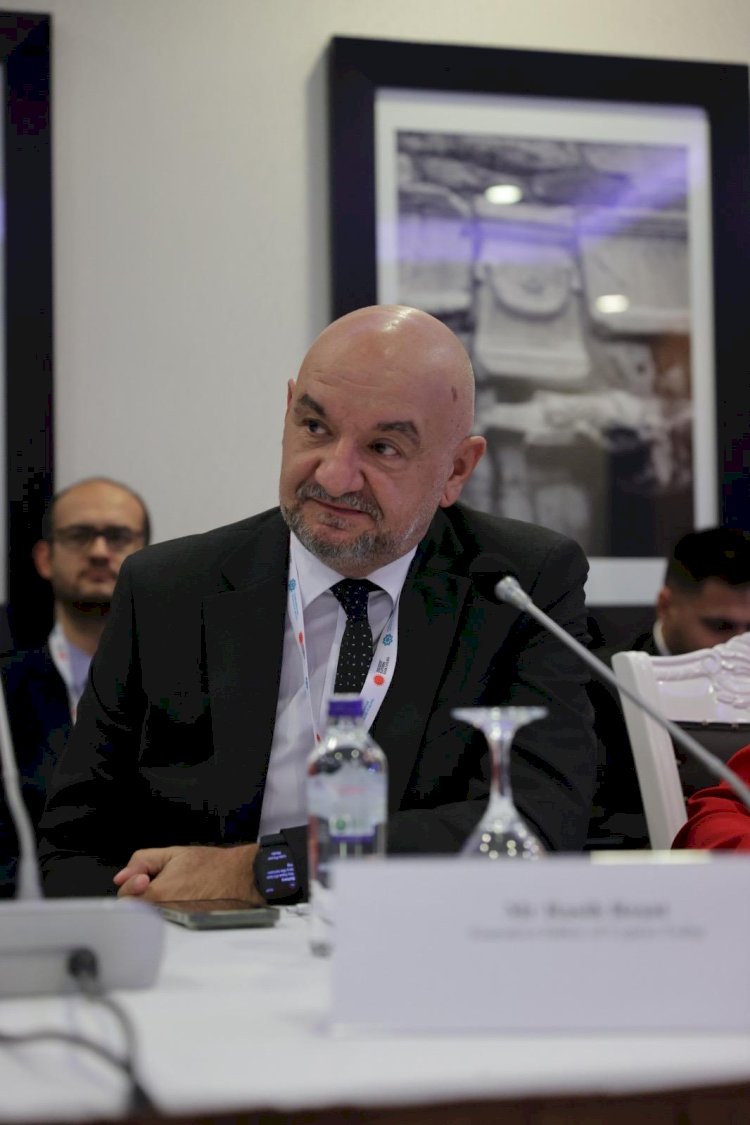
Speaking at the Turkic World Dialogue Forum in Ankara, organised by the Turkish Presidency’s Directorate of Communications, Reşat said people needed help to recognise reliable information and understand which sources to trust.
Reşat, who is also Editor-in-Chief of rasihresatinhaberi.com, was addressing a roundtable on “Strategic Communication and Combating Disinformation in the Turkic World”.
He said the speed at which information travels had made the effects of disinformation more damaging.
“To put it plainly, this is a process of poisoning,” he said. “I prefer to describe the wider problem we are discussing here as ‘information poisoning’.”
Reşat argued that tackling the problem required more than correcting individual falsehoods. People also needed to learn how to assess the information they encountered.
Drawing a comparison with public health campaigns during the Covid pandemic, he said public information videos had helped people understand how to protect themselves and others.
“We learnt again how to wash our hands, to avoid kissing and hugging, and to be more careful about hygiene,” he said. “We have seen that the public can be educated. What we are facing is an epidemic of information poisoning, and people must be educated about it.”
Reşat said some social media users described themselves as “citizen journalists” while sharing claims without checking whether they were true.
“They hear something, assume it is true and put it before the public. Social media then helps it spread rapidly, just like an infectious disease,” he said.
He stressed the importance of professional journalism, credibility and transparency, while noting that states could use strategic communication both to defend against disinformation and as an offensive tool.
“We must also teach people how to consume information, what to trust and what not to trust,” he said.
“You trust a doctor to operate on your child, yet when it comes to information that will influence your decisions, you may trust anyone holding a phone.”
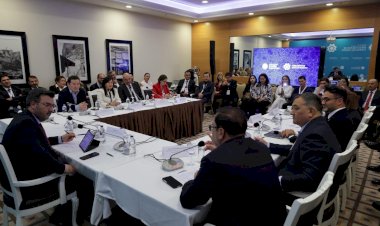
The roundtable was moderated by Kasım İleri, head of the Directorate of Communications’ Strategic Communication and Crisis Management Department.
Deniz Demir, co-ordinator of Türkiye’s Centre for Combating Disinformation, said the centre used artificial intelligence tools to monitor campaigns targeting the Turkic world and called for closer institutional co-operation.
Jalgasbek Altayev, director-general of Kazakhstan’s national television channel, recalled initially mistaking an AI-generated video submitted by a presenter applicant for a genuine recording, highlighting the need to train journalists to identify fabricated content.
Nurcan Kasımalieva, head of international relations at Kyrgyzstan’s Kabar News Agency, stressed the need to verify information before publication, train young journalists in AI use and strengthen co-operation between news agencies.
Prof Sherzodkhon Kudratkhuja, rector of Uzbekistan’s Journalism and Mass Communications University, proposed building trusted news sources and platforms bringing together young people and social media content creators.
Associate Prof Eva Jakusne Harnos, of Hungary’s Ludovika University of Public Service, warned that misleading information could spread through apparently legitimate sources and said false claims required a timely response.
Emre Zeren Safa, chairman of Mykibris.com, called for “strategic credibility” alongside strategic communication, arguing that even widely circulated messages could fail if audiences did not trust their source.
Dr Karolina Wanda Olszowska, of Poland’s Jagiellonian University, said countries should monitor narratives about them abroad and establish active communication channels to respond to disinformation campaigns.