
End of an era. TRNC moves to scrap cross-party voting
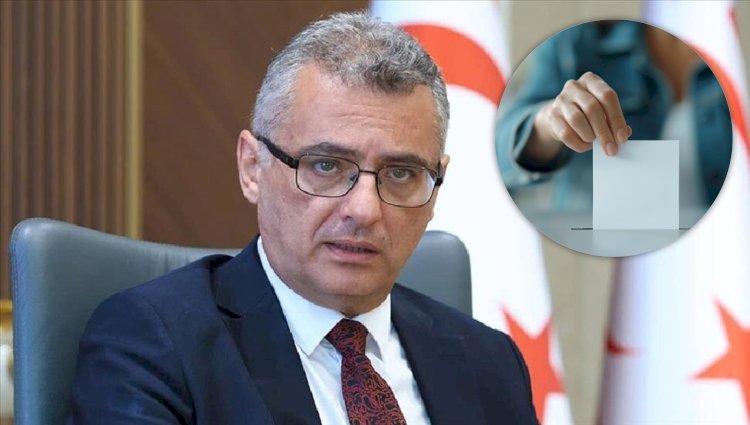
A voting system which allowed Turkish Cypriots to effectively build their own parliamentary candidate list rather than accept the one presented to them by a political party is on the verge of disappearing after Parliament voted to abolish cross-party voting.
Known locally as karma oy, the system allowed voters to distribute their votes among candidates from different political parties instead of voting for a single party list.
It gave the electorate an unusual degree of freedom: a voter could support candidates from the National Unity Party (UBP), Republican Turkish Party (CTP) and other parties on the same ballot, effectively creating their own preferred team of MPs.
That option was abolished by Parliament on September 10, when government MPs passed amendments to the Election and Referendum Law during an extraordinary sitting. Cross-party voting would be removed from both parliamentary and municipal council elections, although voters would retain the right to choose between candidates within the party they support.
But the change has now hit a presidential roadblock.
President Tufan Erhürman returned the legislation to Parliament on Thursday for reconsideration, meaning MPs will have to examine the controversial changes again before they can become law.
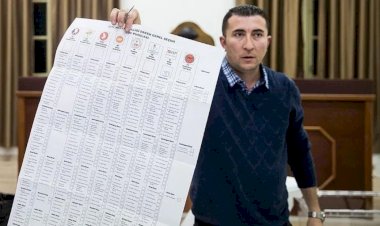
Cross-party voting has long been regarded as one of the more distinctive elements of the Turkish Cypriot electoral system because it reduced the control political parties exercised over which candidates reached Parliament.
Supporters regarded it as highly democratic: instead of simply accepting the candidates chosen and ordered by party structures, voters could reward individual politicians they trusted regardless of party affiliation.
But the same characteristic increasingly became one of the principal arguments against it.
In a small society where politicians, professionals and voters frequently know one another personally, individual popularity increasingly competed with — and sometimes overshadowed — political parties, manifestos and ideological loyalty.
Instead of identifying primarily as a UBP, CTP or another party voter, sections of the electorate could become personally loyal to individual politicians.
Critics of the system argue this encouraged personality-based politics, patronage networks and the electoral importance of personal relationships, while weakening the significance of party programmes and collective political responsibility.
Even HP leader Kudret Özersay, himself one of the biggest beneficiaries of cross-party voting, has backed its abolition, arguing that what began as a democratic right had over time become vulnerable to political exploitation.
SHOULD THE BIG WINNERS WORRY
Previous election results demonstrate just how powerful the personal vote could become.
Erhürman himself was among the strongest examples. Before becoming President, he attracted 5,376 votes from outside his own party vote — the highest cross-party total among candidates.
Former prime minister Dr Faiz Sucuoğlu was another major beneficiary, receiving 3,507 cross-party votes, while HP leader Kudret Özersay attracted 3,463.
Ali Pilli, Olgun Amcaoğlu and Sıla Usar İncirli were also among the politicians who performed particularly strongly through votes received from outside their own party base.
The figures demonstrated an important feature of the system: some politicians were capable of attracting substantial personal support from voters who were unwilling to vote for their parties.
At the opposite end were politicians including Agriculture Minister Hüseyin Çavuş, Hasan Küçük, Serhat Akpınar, Hasan Tosunoğlu, Erhan Arıklı and Talip Atalay, who were among those receiving relatively few cross-party votes.
The figures have inevitably added another dimension to the controversy surrounding the government's decision.
Prime Minister Ünal Üstel, who spearheaded the move to abolish the system, was also towards the lower end of the cross-party vote rankings.
His opponents have consequently accused him of supporting an electoral change which could benefit politicians more dependent upon their party vote than their personal appeal across political boundaries.
There is, however, no evidence in the voting figures themselves that this was Üstel's motivation, and government supporters argue that the reform is instead intended to restore the importance of political parties, their programmes and their responsibility to voters.
LESS THAN THREE MONTHS BEFORE ELECTION
The timing has made the controversy even more intense.
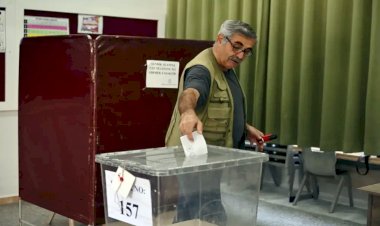
The legislation was passed less than three months before the December 6 elections, when parliamentary and local elections are due to be held on the same day.
Critics have questioned whether such a significant alteration to the way people vote should be introduced so close to polling day, while supporters argue the long-running problems surrounding karma oy justified its removal.
The CTP voted against the legislation, citing procedural objections, while debate has also centred on the democratic consequences of removing a mechanism which gave voters considerably more freedom to choose individual candidates.
The issue is not necessarily settled, however.
Erhürman's decision to return the legislation means it will now go back through Parliament, where MPs will have another opportunity to consider the changes. However speaking to Cyprus Today Prwdient Erhurman said it wasn’t a legal issue it was a matter of a wider principal of not changing the rules this close to election date. He also said that he was sure that the parliament would send it back to a ratified without any changes and the bill would go through.
If Parliament ultimately insists on the changes it approved on September 10, which seems the case, one of the most unusual features of elections in North Cyprus will become history.
Related News

Turkish Vice President Cevdet Yılmaz to visit TRNC
Sep 17, 2026
Guterres rules out New York Cyprus meeting
Sep 17, 2026