18 days to go: TRNC prepares for double election showdown
Cyprus Today
For the first time, parliamentary and municipal elections will be held simultaneously, creating a complex political contest in which national party loyalties, local personalities and dissatisfaction with the economy could all influence the results.
The elections will determine the composition of the 50-seat Parliament and the leadership of the country's 18 municipalities, as well as municipal councils and other local representatives.
CTP and UBP compete for parliamentary control
At the national level, the main contest is between the opposition Republican Turkish Party (CTP) and the governing National Unity Party (UBP).
Recent opinion polls have shown CTP ahead of UBP, although the size of the gap varies considerably between surveys.
A telephone survey conducted between October 28 and November 2 placed CTP at 37.14 per cent and UBP at 32.79 per cent after undecided voters were proportionally distributed. Other surveys have recorded wider differences.
However, opinion polls do not necessarily translate directly into parliamentary seats, particularly under the TRNC's electoral system, where seats are allocated separately across six districts.
The next Parliament could therefore depend not only on the performance of the two largest parties but also on the results achieved by smaller parties.
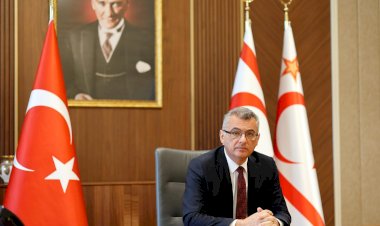
The election is particularly significant for Prime Minister Ünal Üstel, who is seeking a renewed mandate after a period marked by economic difficulties, political disagreements and allegations of corruption involving figures in and around the governing party.
UBP has rejected opposition criticism of its record and is campaigning on its experience in government, its relationship with Türkiye and promises of further investment and reform.
Meanwhile, CTP is campaigning for a change in government, focusing on economic management, public accountability and institutional reform.
Economy and military service dominate campaign
The cost of living remains a central issue, with households continuing to face pressure from high prices, housing costs and concerns about purchasing power.
Government promises on infrastructure, employment and economic development are competing with opposition demands for greater transparency and changes in economic policy.
One of the most discussed campaign promises has come from Prime Minister Üstel, who has pledged to introduce legislation allowing unconditional paid military service if his party returns to government.
Üstel says the proposed legislation has been prepared following consultations with Ankara and would be among the first measures submitted to Parliament.
The proposal has attracted attention, particularly among younger voters and families concerned about compulsory military service. However, questions remain about its implementation and potential implications for military manpower.
Mixed voting system abolished
Another important development is the abolition of the mixed voting system, known as karma oy.
Previously, voters could select parliamentary or municipal council candidates from different political parties.
Under the new rules, voters must choose a party list, although they retain the ability to express preferences among candidates within that party.
The change means that voters accustomed to supporting individual candidates across party lines will have to adapt to a different system.
Political parties are also assessing how the new arrangements could affect their candidates and the distribution of seats.
Local contests add another dimension
While the parliamentary election will determine the next government, the municipal elections are developing their own political dynamics.
In Nicosia, incumbent mayor Mehmet Harmancı is seeking another term, with UBP's Mehmet Aktunç among his challengers.
In Famagusta, CTP mayor Süleyman Uluçay faces UBP candidate Koral Bozkurt in a contest centred on municipal services, development and competing visions for the city's future.
Other major municipalities, including Kyrenia, İskele, Morphou and the rapidly developing suburban areas, are also seeing campaigns focused on infrastructure, traffic, housing, environmental protection and local investment.
Unlike parliamentary elections, municipal contests are often influenced by the personal popularity of candidates and their records in local government.
This means voters may support one political party nationally while choosing a candidate from another party in the mayoral election.
Smaller parties could play an important role
The election also provides an opportunity for smaller political parties to shape the next parliamentary balance.
The Rebirth Party (YDP), Democratic Party (DP), Communal Democracy Party (TDP), People's Party (HP) and other political movements are competing for representation.
Their performance will be particularly important if no party secures the 26 seats required for an outright parliamentary majority.
The possibility of coalition negotiations following the election therefore remains an important part of the political discussion.
Final stretch of campaigning
With election day approaching, political parties and candidates are intensifying their campaigns through rallies, television appearances, social media and visits to neighbourhoods, villages and businesses.
The final weeks will also test the ability of parties to mobilise their supporters and persuade undecided voters.
Under the official election calendar, November 21 is the final day on which election opinion polls may be published.
Voters will go to the polls on Sunday, December 6, in an election that will determine both the country's national political direction and the future of its local administrations.
With two elections taking place simultaneously, a new voting system and several competitive local contests, December 6 promises to be an important test for the TRNC's political parties.
For voters, the choice will be about more than who forms the next government. It will also determine who runs their towns and cities for the next four years.